Juravenator taphonomy
mixed techniques (handmade, 3d printed, synthetic filaments)
model as living / illustrations / fossilisation comic
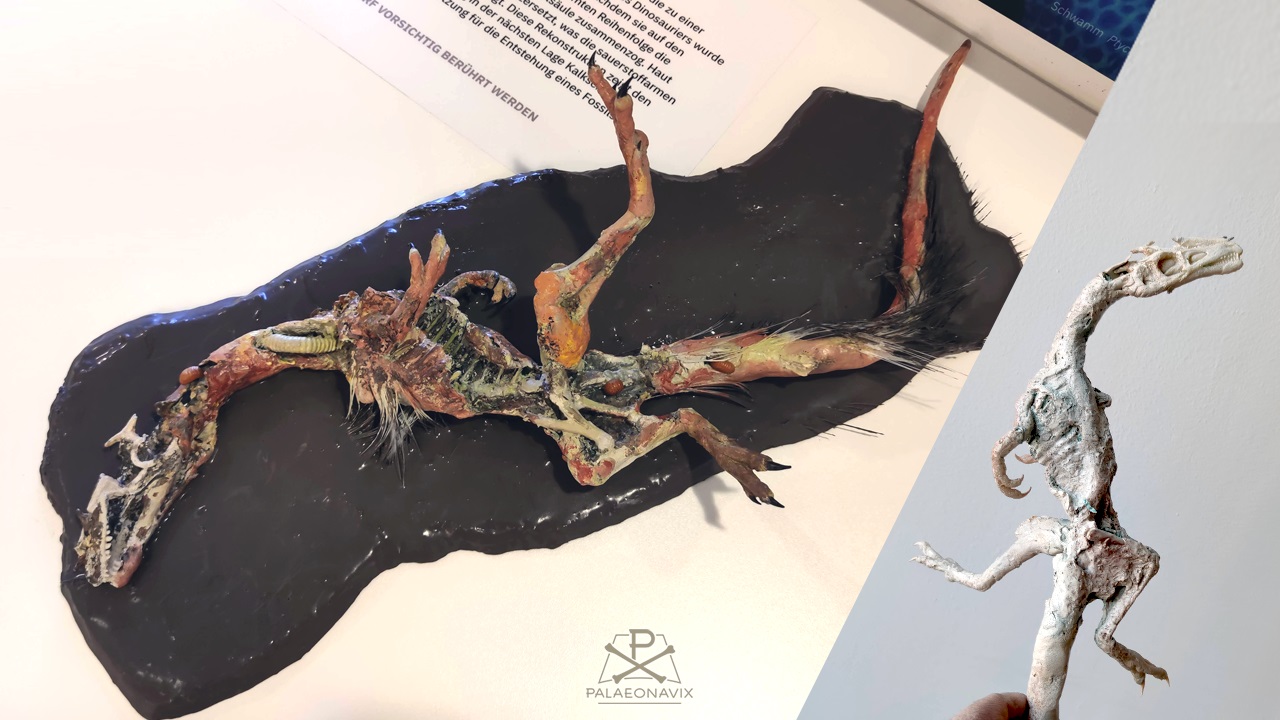
Not many museums would ask for this, but it is so highly interesting to connect between the fossils in museums or quarries and the life restorations shown as models or illustrations. The tiny dinosaur Juravenator is among the best cases for a taphonomic model, since the decay and fossilisation of the so far unique specimen have been analysed in great detail. The understanding of the processes underlying the Late Jurassic “Solnhofen” limestones is the major scope of this hands-on object.
The skeleton’s position had to be sketched for a stage prior to final burial and compaction. The amount of remaining soft tissue is a matter of speculation, using published data for a careful discussion. However, there are also some technical compromises in terms of stability or information. The seabed is build of dull, powder-enriched silicone to simulate unsolidified and originally organic-rich lime mud. A few scavenging isopod crustaceans were truly identified during preparation, also included to the concept. The familiar appearance of the exposed fossil is on the now hidden ventral side.