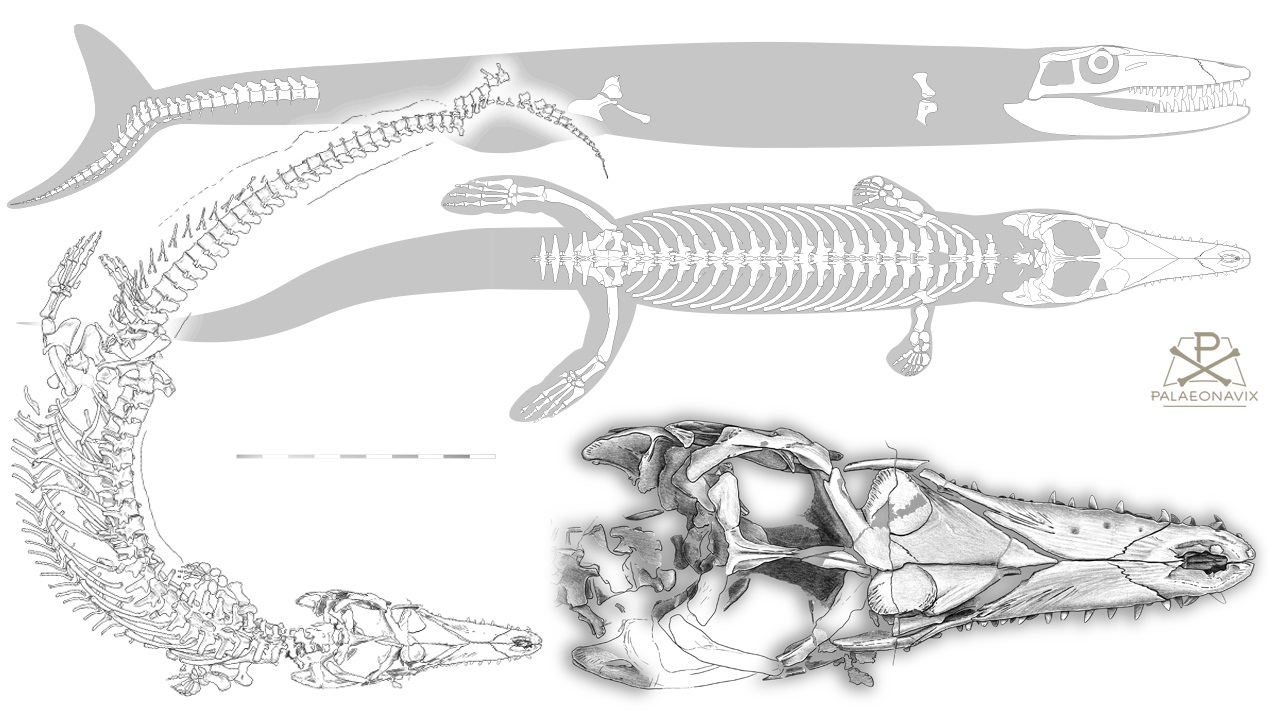
When asking what this creature might be, some voted for mosasaurs. From an ecological point of view, this seems right, as Dakosaurus is some sort of an early adopter of the mosasaur typology. This is all the more a genuine evolutionary observation, since the latter did not appear before the extinction of the first. The other typological model of Dakosaurus is a sea serpent, although the navigating extremities and the fish-like fluke make it a significantly different sort of marine reptile.
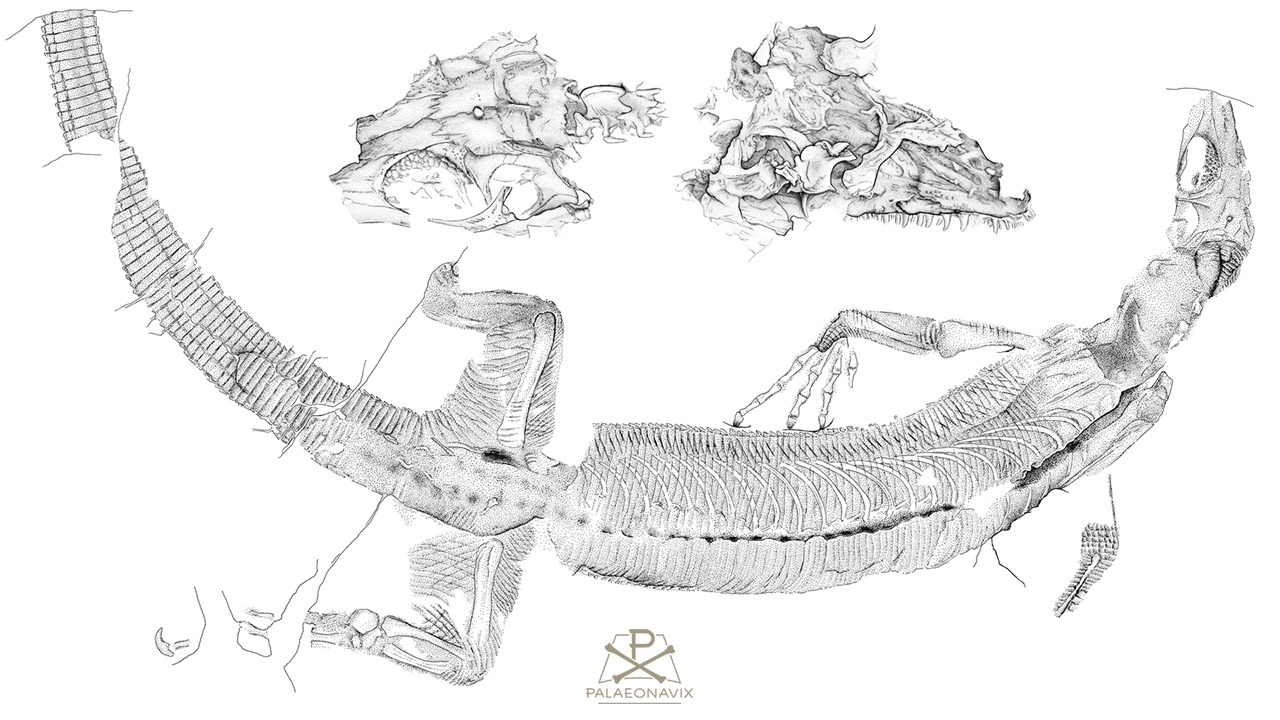
The entire familiy of Metriorhynchidae, to which Dakosaurus belongs as one of the largest members, is a good example for convergent evolution. Not only do the extremities show an almost complete flipper-like anatomy shared with several lineages of marine amniotes. Metriorhynchids also possessed large scleral rings as part of their eyes, which is shared only with ichthyosaurs. In these more dolphin-like reptiles, bony eye rings also may have served as a protection against pressure in the deep when diving. Since Metriorhynchids didn’t dive that deep, the other function was likely protection against the pressure that occurs during high speed, in order to keep the focussing abilities. However, metriorhynchids belong to a clade named Crocodyliformes that almost entirely lost the scleral rings, so these structures are a reinvention within their lineage.
Interestingly, the ancestors of all crocodyliforms were terrestrial. Secondary aquatic adaptations occurred in several subgroups, and in case of the Metriorhynchidae this is not the same from which our extant crocodiles evolved from. Being systematically correct, Dakosaurus is not a true crocodile, just another stem crocodile from the Jurassic. In terms of aquatic adaptations, it is as non-terrestrial as can be. Even the skin is no longer scaly and would not be able to stand normal ultraviolet radiation during basking on banks or beaches.
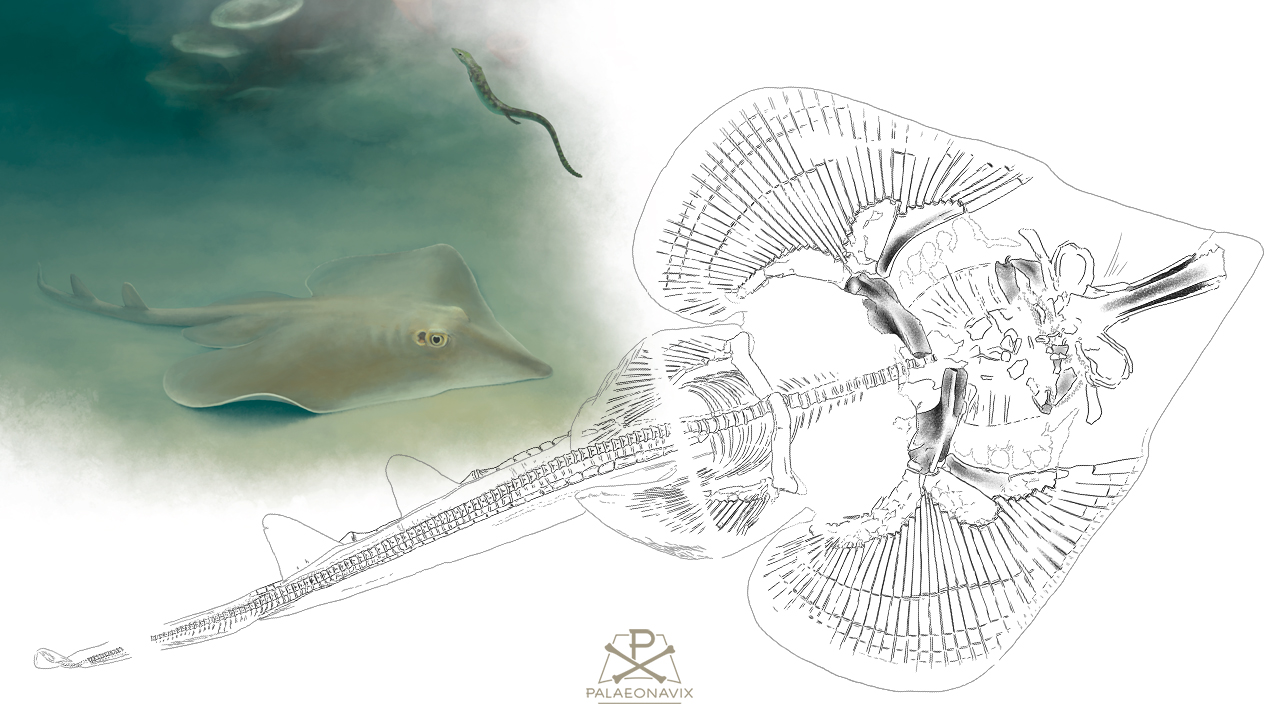
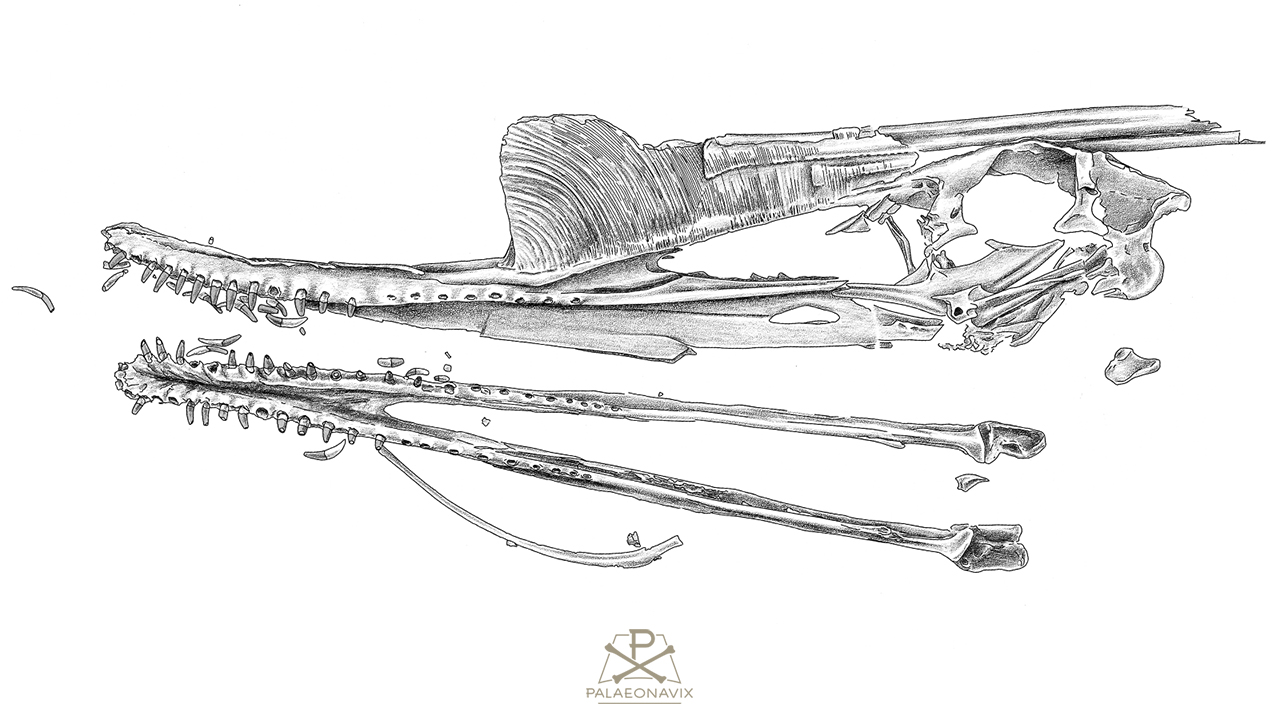
In some Late Jurassic strata of Europe and South America, Dakosaurus is a rare but common predator. Most fossils are from isolated teeth, some skulls and partial skeletons. We were happy to document the first complete specimen that finally informed about the true body shape of this rather elegant hunter. From this very individual comes a piece of stomach content: Clearly some bigger cartilaginous fish, most likely a hybodont shark.