
Archaeopteryx’ world: from sea to shining sea
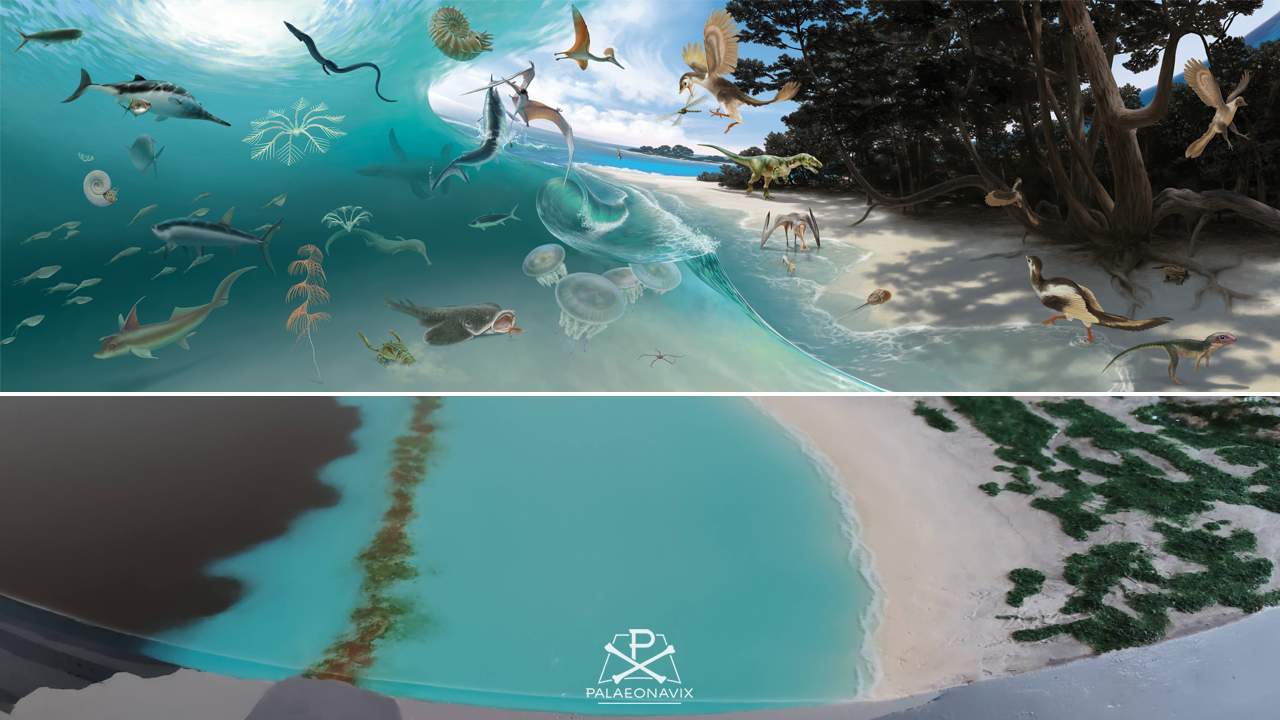
digital painting 2025 (idea developed with the sorely missed Martin Roeper around 2018); below as a miniature facies block model
Altmühltal Nature Park Information Centre
For a very long time, Archaeopteryx was the only complete taxon known to explain the origin of birds. We could say that the Bavarian Urvogel showed us where birds come from; the Chinese ancient birds made it clear which path they took. Even as awareness has grown that the feather-bearing predatory dinosaurs learned to fly several times, Archaeopteryx is confirmed as the best record of the very descent that actually led to modern birds and survives to the present day.
No doubt Archaeopteryx was capable of flight, but it was not an acrobat built for oceanic overflights. And yet its entire environment was shaped by the sea. In the late Jurassic, the sea level was much higher than today and flooded most of Southern Germany. The finds from the platy limestones (Plattenkalk) in the Southern Franconian Alb originate from deposits in the shallow sea, a carbonate platform with patchy reefs. Depending on the sea level, the nearest larger land mass was about 100 km away, the Bohemian Island to the east and the Rhenish Massif to the west. Small and geologically short-lived islands in the shelf sea in between are the result of reef growth and subsequent sea level fall. If a reef fell dry, a bare, porous limestone was left behind, which was not only exposed to immediate weathering, but could also soak up fresh water with every monsoon rain.
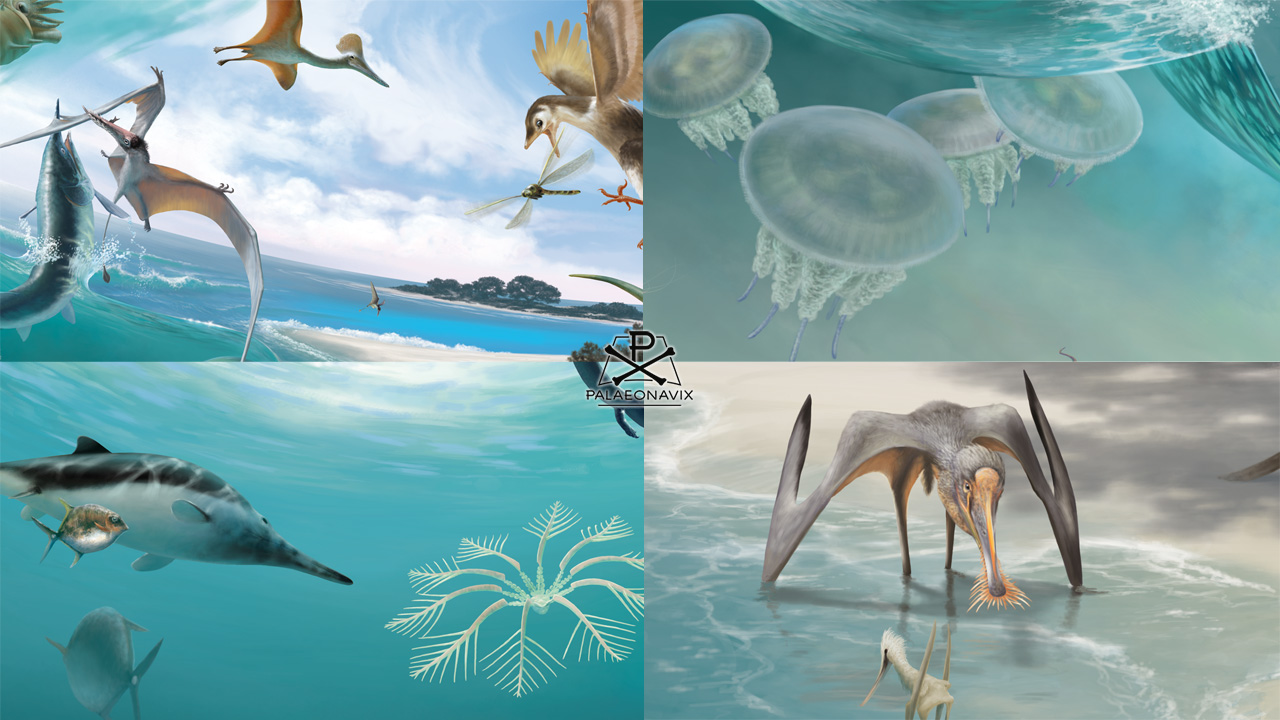
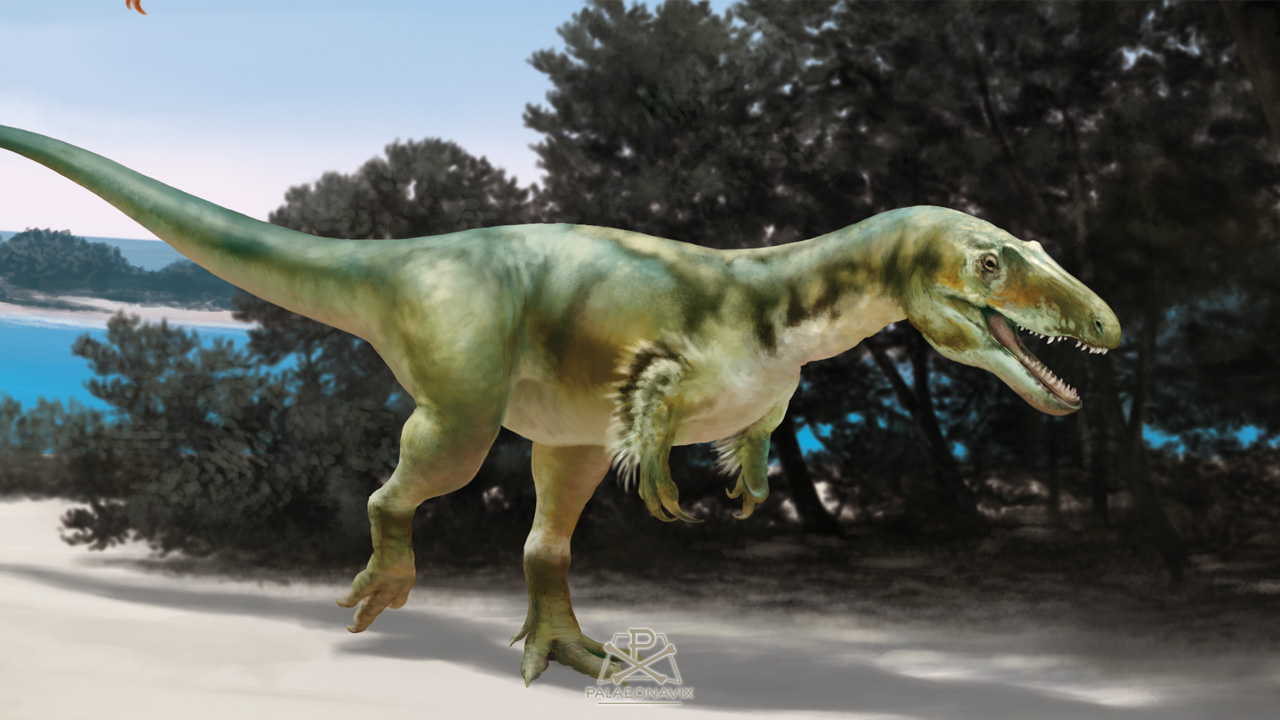
What drifted across the sea from the mainland usually perished in the vastness of the Tethys Ocean. Or, by a stroke of luck, it landed on such a young island. The first cones that floated ashore soon grew into an oasis for land creatures, providing shade and food. The various pterosaurs only needed solid ground for their sleeping and nesting sites. The food they obtained from the sea became fertilizer for some beaches. As soon as an insect fauna became established thanks to flotsam and flora, reptiles had a chance of survival. They arrived on natural rafts, for example when a storm on the distant mainland caused a tree root to break away from the bank. On such vehicles, small crocodiles, lizards and dinosaurs got into distress at sea, some of which occasionally found rescue on the islands. The habitat of the Archaeopteryx was born!
Yet this had little impact on the surrounding marine habitat. The islands were small and after a short geological period they were weathered or flooded by the again rising sea level. The dynamics of currents and reef growth had a much greater influence. The wonderfully preserved Plattenkalk fossils come from areas that were cut off from oxygen circulation. The Archaeopteryx fossils known to us once floated as a corpse above such a site in the vicinity of an island that they had previously inhabited. Having sunk to the bottom of the sea, they remained undisturbed by scavengers, as the rich fish and crustacean fauna was restricted to the upper layers of the water. Only where the water was even shallower or where there was a more direct connection with the open sea did starfish, benthic bony fish and walking crabs thrive.
Overall, the fauna is so diverse that nowhere else can the ecology of the late Jurassic be studied more thoroughly than in this 'Solnhofen archipelago'. Fishes of all sizes and sorts, squid, ammonites, starfish, crinoids and urchins, jellyfish, horseshoe crabs. Not to forget the marine reptiles such as ichthyosaurs, pleurosaurs, pliosaurs and teleosaurs, all four with independent ancestry from land reptiles.