

Goniatite, Ceratite & Ammonites
digital painting 2024
ammonite extinction / non-ammonoid molluscs with coiled shells: nautiloids & argonauts
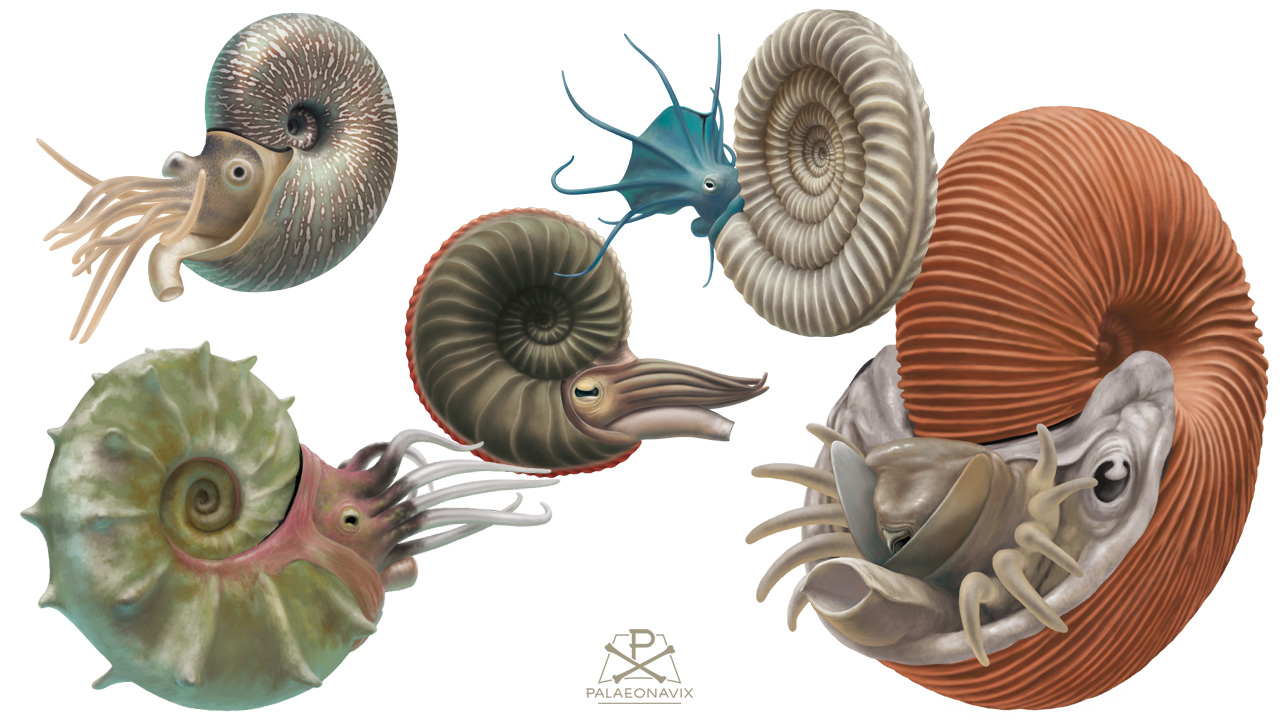
Ammonoidean cephalopods appeared early in the Devonian, more than 400 million years ago. They share a common ancestor with a branch comprising belemnites and the sepia-squid-octopus group. Being more derived than nautiloids, their soft tissue like eyes and arms is tentatively compared with modern cephalopod molluscs. However, little is known about the body itself, possibly due to an accelerated post-mortem decay of freely swimming cephalopods, which contain a high percentage of ammonia (the name is coincidental!).
On the upper left is Goniatites, a small representative from the late Palaeozoic with the least sophisticated inner shell structures. The lower left one is the intermediate stage of Ceratites from the Triassic. Ammonitida from the centre to the right are (not to scale): Amaltheus, a flattened and keeled Early Jurassic form; Arietites, a big evolute one even older in the Early Jurassic; and Macrocephalites, a wide and involute Middle Jurassic ammonite.