Fossilisation comic
digital graphic 2025
see full exhibition concept for Altmühltal Nature Park / see a taphonomic sculpture of Juravenator
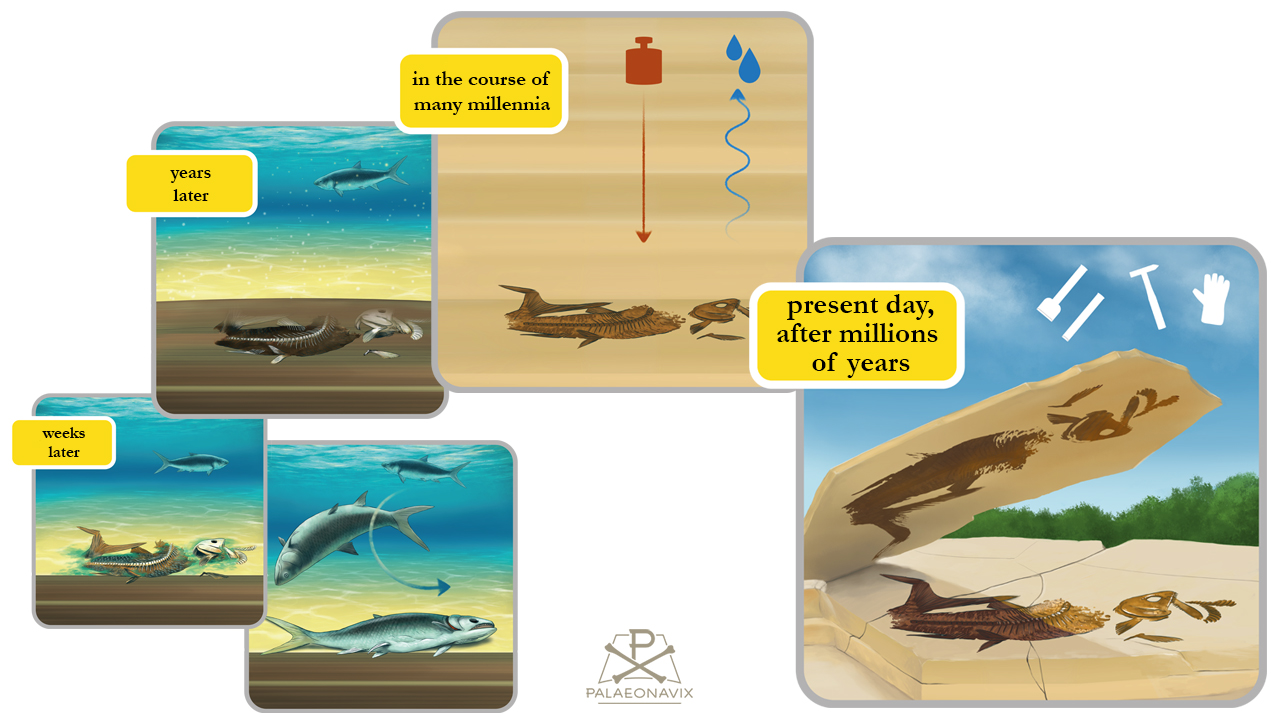
Fossilisation processes can vary greatly, depending on a series of factors. The simplified pathway for the fine-layered limestones of the Late Jurassic ‘Solnhofen’ archipelago is shown for Caturus (amiiform mesopredatory fish) and also adapted to the dinosaur Juravenator:
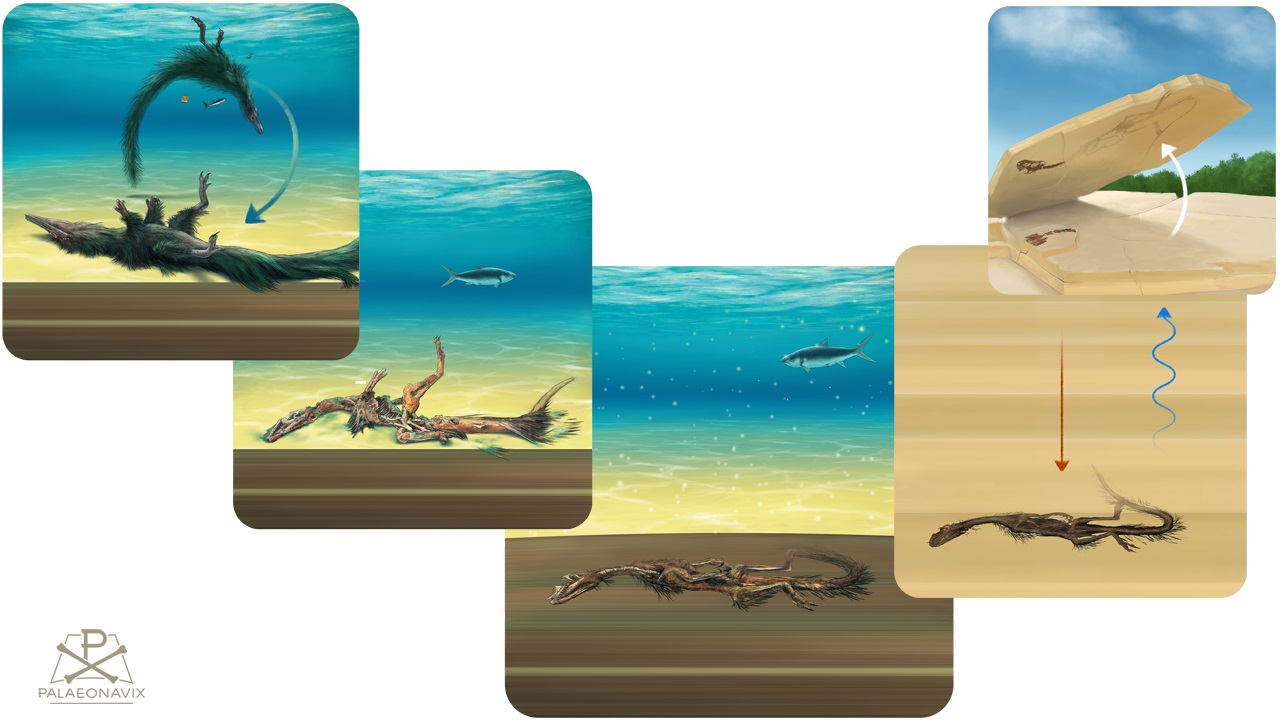
150 million years ago, a dead body floated across the lagoon. Bacteria and scavengers such as fish and crustaceans decomposed the soft tissue.
Weeks later, the joints loosened. Tendons and flesh remnants contracted. Since there is too little oxygen at the bottom of the sea, the tissue is only partially decomposed in this case.
Years later, new layers of limestone particles buried the body. The decomposition continued slowly, while the position of the body then remained unchanged forever. In a rare occurrence, some skin remains were preserved.
Over thousands of years, new sediments press the layers together. Most of the water escapes. The resulting limestone undergoes bleaching. Iron oxide colours the now fossilised bones reddish.
In the end, a discovery might be made. Collectors recover the fossil. It is not yet fully prepared. Sometimes, laborious preparation work must be done before examination..