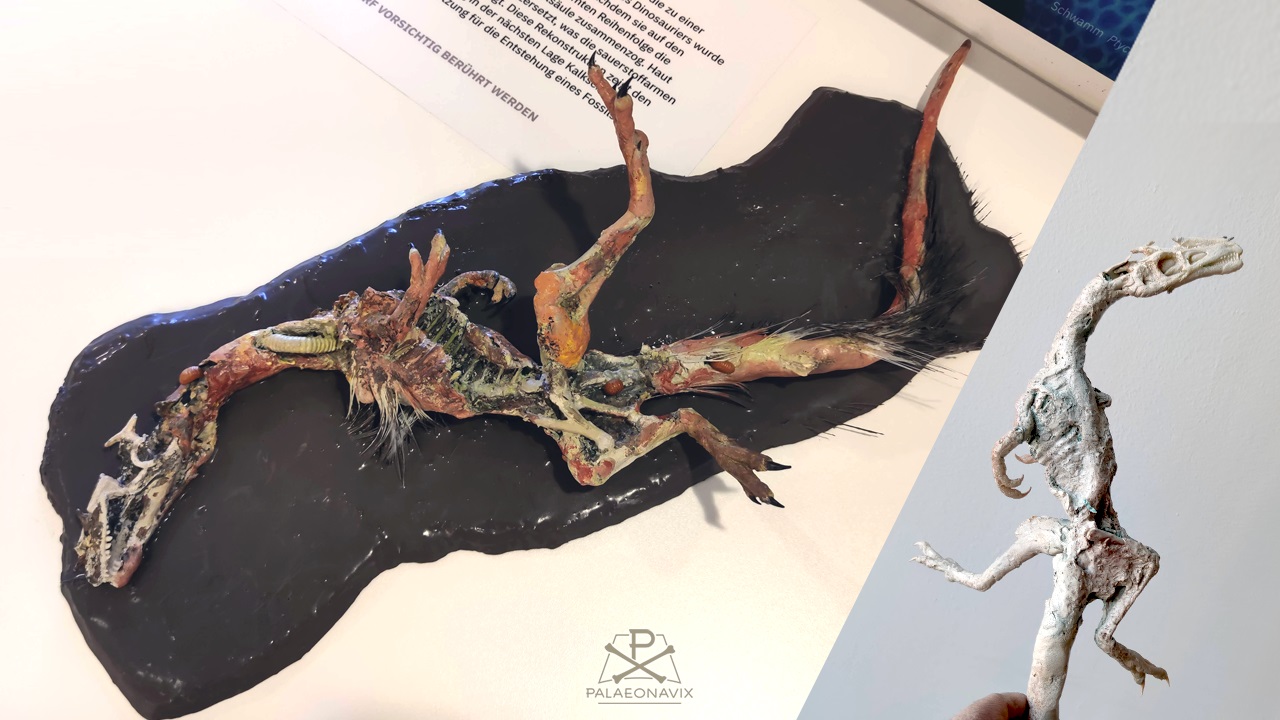
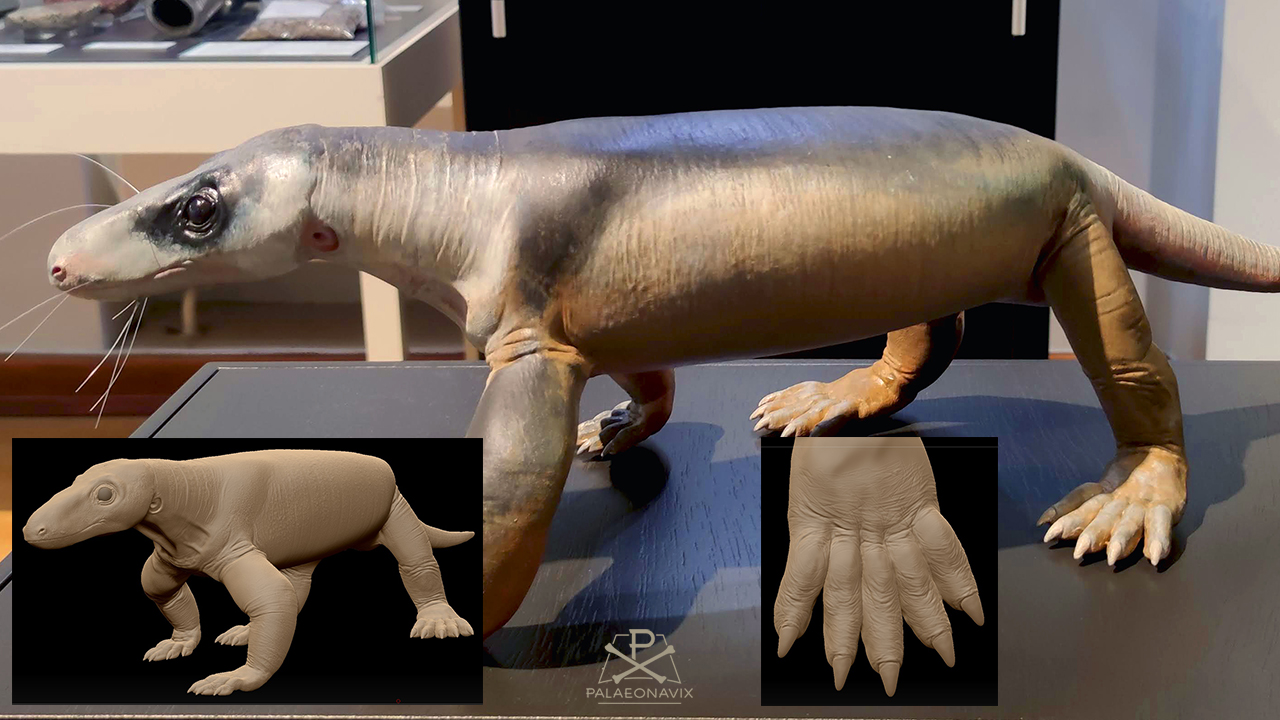
Procynosuchus, literally the “pre-dog crocodile,” is one of the most primitive cynodonts known to us. This means it represents the origin of a lineage within which major changes leading toward mammals took place. As far as the skeletons are concerned, from which we can draw very direct conclusions, there is therefore little doubt about the nature of this small, dachshund-sized animal (the German common name “Korbacher Dackel” refers to its size and overall shape). There is also reason to believe that this animal stands amid the transition from hairless to fur-bearing mammal ancestors, even if this already requires more interpretation. The model, with its still-naked skin, also takes a rather practical approach.
Therapsids from the Late Permian are found primarily in Africa and Eastern Europe. In Germany, there is a fossil site with fissure fills that document this fauna. It represents a community that existed not long before the greatest mass extinction in Earth’s history. Remarkably, it was these more progressive therapsids, including several families of cynodonts, that survived this catastrophic phase. The reasons are not written on the underside of the fossils, but we can assume that their only medium body size, enhanced physiological capabilities, and likely also a burrowing lifestyle contributed to the survival of these animals. If they had not survived, mammals would never have evolved.