digital painting, 2024
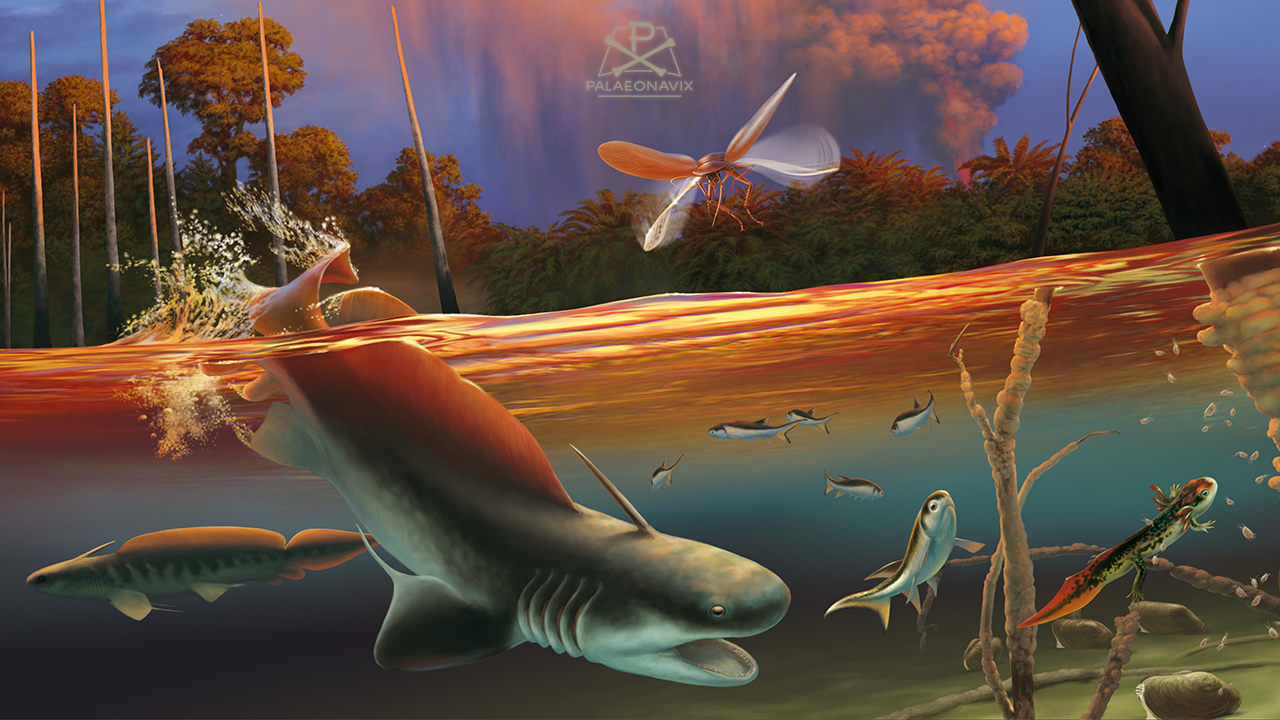
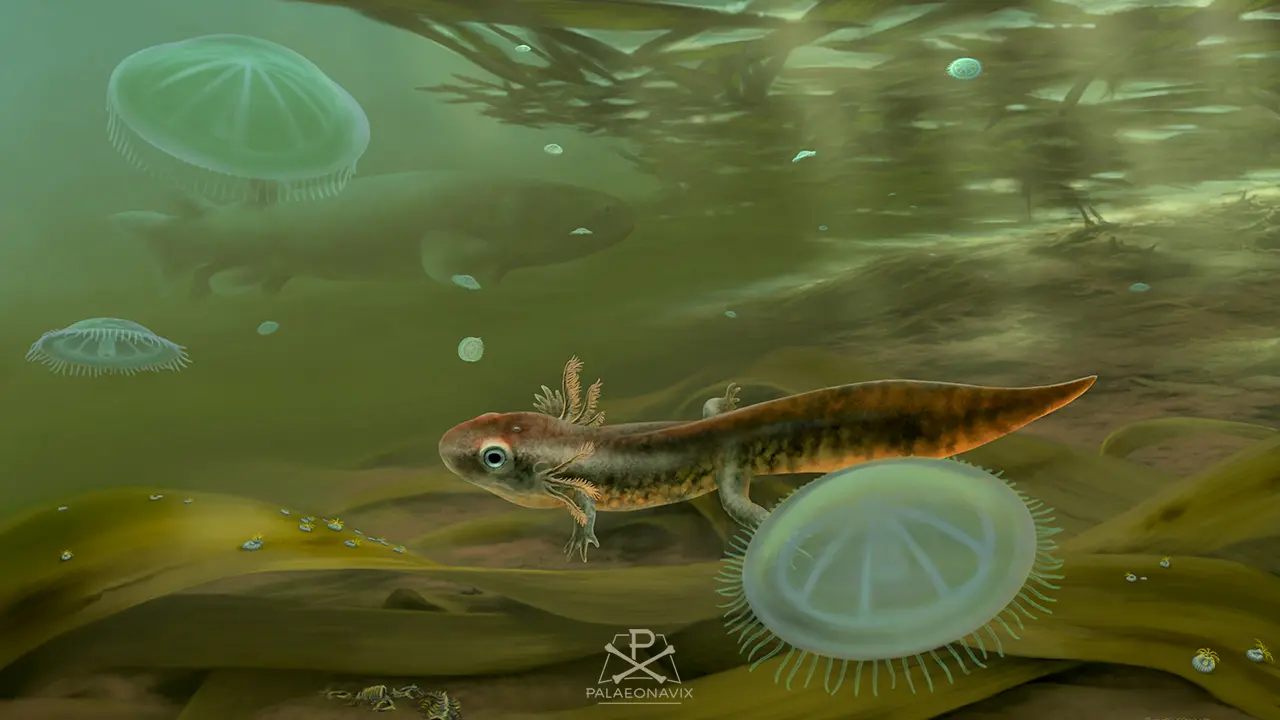
On the evolutionary path toward modern amphibians—such as salamanders and frogs—the temnospondyl amphibians became quite small. This is especially true of this relatively recent discovery from Rhineland-Palatinate, which researchers initially considered might represent a separate genus. In fact, this tiny creature can be classified as a new species within an already known genus: Melanerpeton kuselense grew to only about 6 cm in length. This places it in the same size class as freshwater jellyfish, meaning it occupies a position in the food chain just above plankton and small tubeworms.
Its phylogenetic classification is interesting in that it shows no close relationship to other known branchiosaurids from the Saar-Nahe Basin. Although the fauna of aquatic tetrapods exhibits many characteristics typical of this region, Melanerpeton kuselense provides further evidence of immigration.
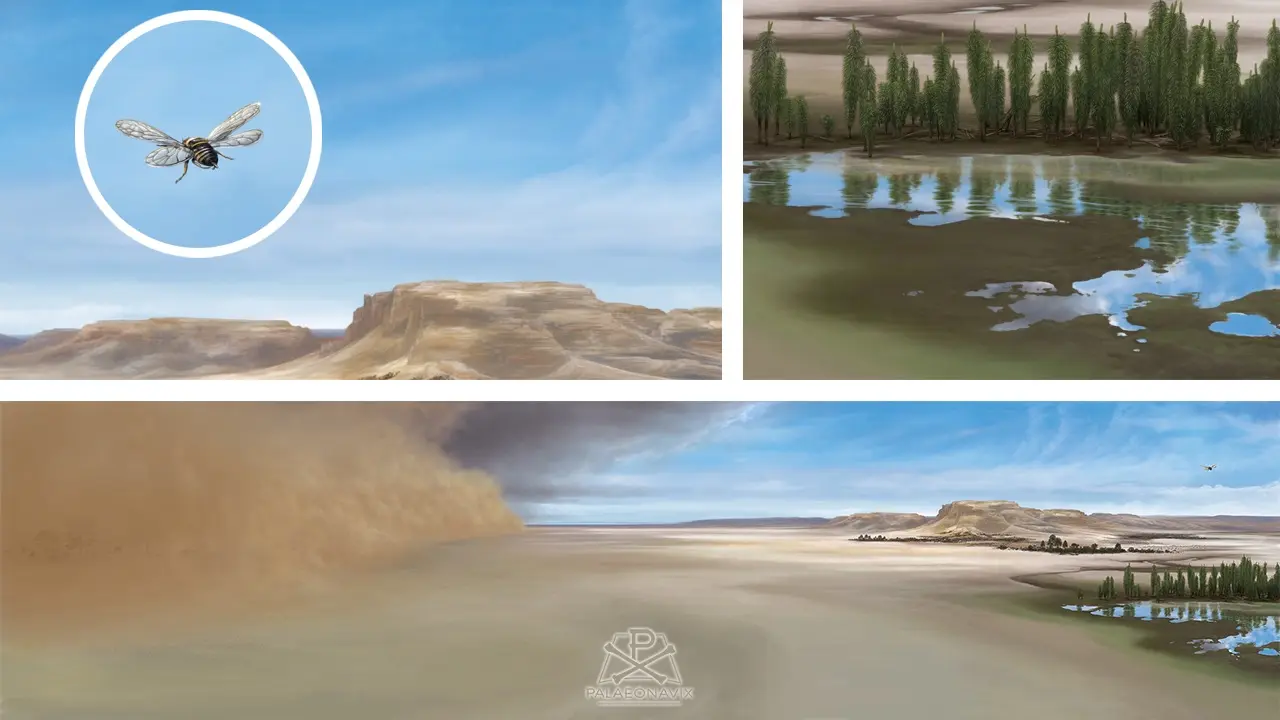
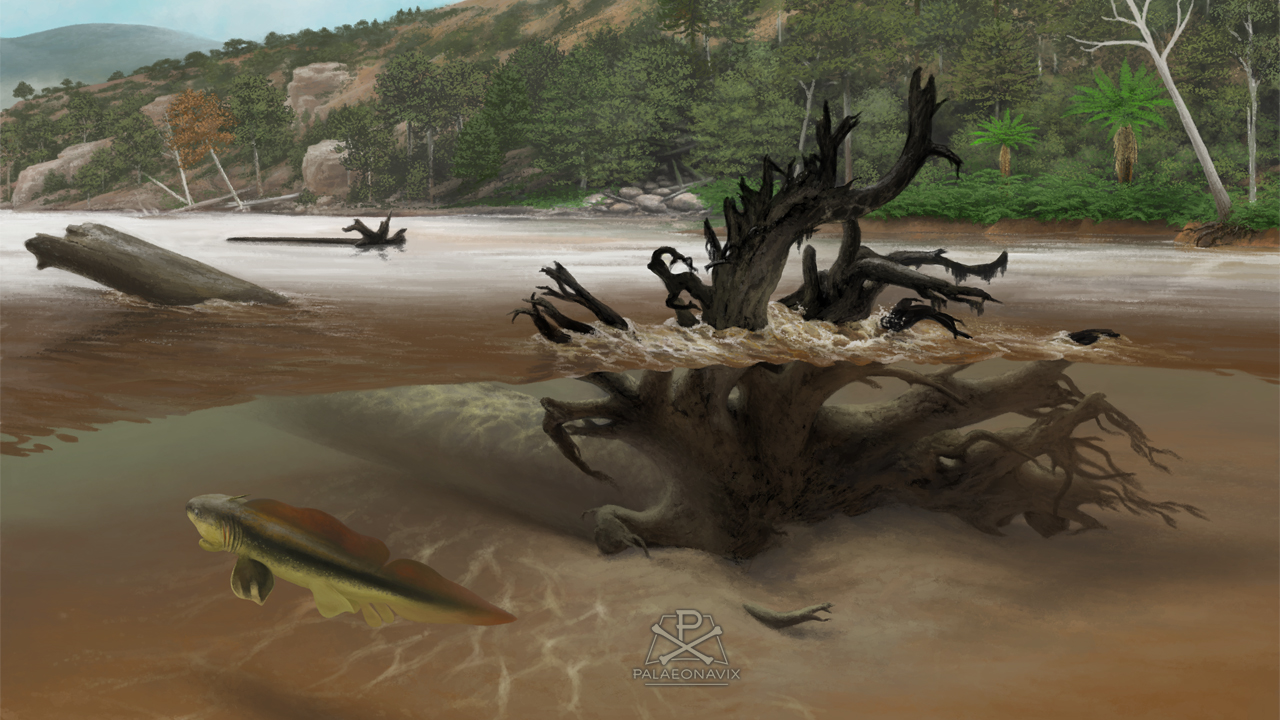
Definitely a nice, not-too-dramatic picture. The large fish in the background would certainly be a potential predator for small amphibians. First and foremost, however, this element of the image serves to evoke a sense of prehistoric times. After all, this lake—whether from the Carboniferous or Permian period (the dating is borderline)—could have looked like this during many geological eras.
Schoch, R.S., Werneburg, R., & Voigt, S. (2026): A new diminutive temnospondyl from the Carboniferous-Permian boundary in Germany. Journal of Paleontology, 100 (2): 257–267. https://doi.org/10.1017/jpa.2026.10246
COVER ILLUSTRATION for the Journal of Paleontology, 100 (2)